

Wooden Pallets
Everything you need to know about wooden pallets
Introduction
Global supply chains and modern logistics rely on wooden pallets as a cost effective and durable solution for transporting, storing and handling goods.
They are not only practical but also sustainable, with the ability to be reused, repaired and recycled, giving them a long usable lifecycle.
Used across industries from retail to construction, wooden pallets come in a range of designs to suit different needs, with options continuing to grow through innovation.
“Wooden pallets remain the backbone of modern logistics. Their strength, versatility and sustainability make them an essential part of supply chains across every industry not only in the UK, but globally.”
Abbigail Taylor, Business Development Manager, Scott Pallets
Want to find out more?
Learn more
What are wooden pallets?
Dating back as far as Ancient Egypt, but still essential for modern-day logistics and supply chain operations, wooden pallets provide a flat transportation platform and uniform method for lifting, storing and moving goods. Typically, they follow a similar structure of deck boards (top and bottom layers) and support beams. Their similar make up, adopted worldwide, facilitates standardised stacking in warehouses which helps make efficient and safer use of space.
Pallets can vary in dimensions and load capabilities – whatever you choose will be determined by your handling needs and any compliance in the areas where you are operating.
Their many benefits and cost effectiveness are the reasons why the simple pallet continues to stand the test of time.

Types of wooden pallets
The simple structure of a pallet can flex to suit your specific need. Whether you’re transporting casks of precious whisky or boxes of life-saving medicine, you should be able to find a pallet that’s the perfect fit.
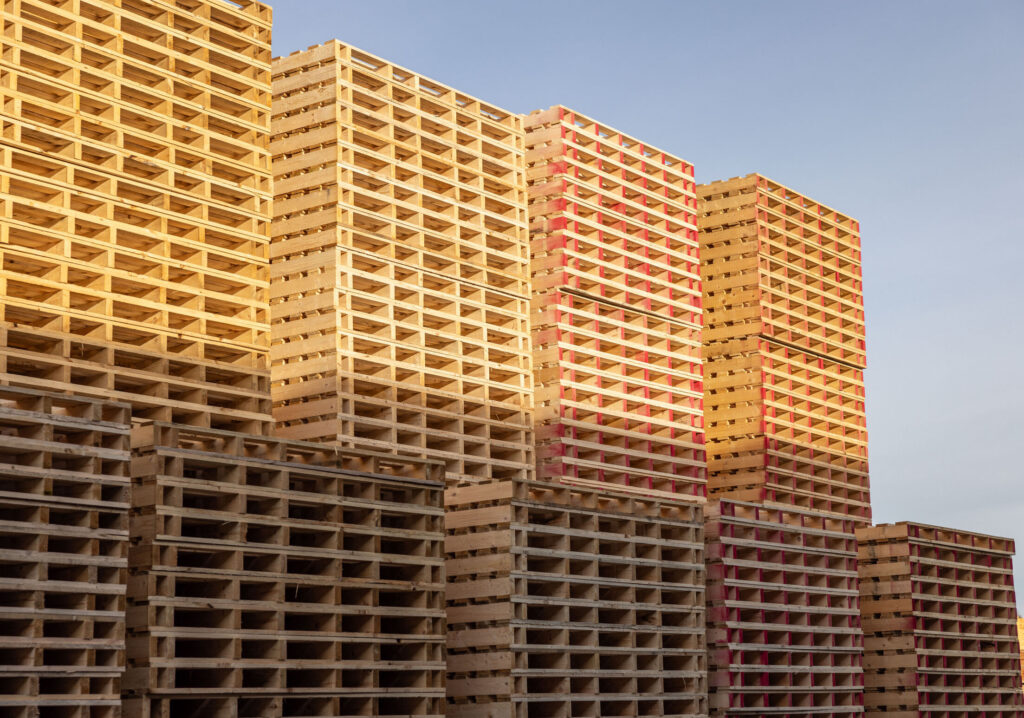
Block pallets
Sturdy and easy to handle. With cylindrical blocks that separate the top and bottom decks, they are easily transported by forklift from all sides.
Stringer pallets
With stringers (long support beams), these pallets come in two-way or four-way designs depending on the number of forklift entry points. This makes them versatile and popular.
Double-faced pallets
Their top and bottom decks make for enhanced strength and weight distribution. They may also be reversible (useable on either side) or non-reversible.
Solid deck pallets
With a continuous surface and no gaps, these pallets are perfect for loading smaller items.
Open deck pallets
These are pallets that do feature gaps between their boards. This makes them the right choice for larger items when you need a more cost-effective solution.
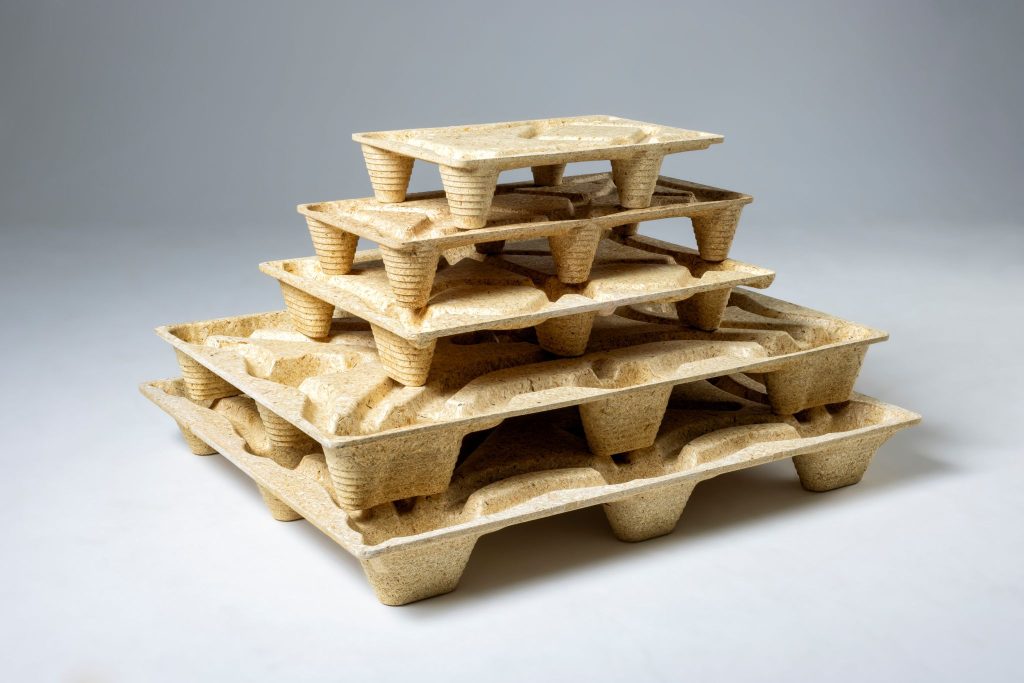
Pressboard pallets
Made from sawdust and reprocessed, recycled wood chips, the material is then compression moulded to for a wood composite pallet. They will be smooth with finished edges.
Customised and specialised pallets
If you have a specific need, there’s always a pallet option to match. Innovations mean that there are variations in recycled pallets and designs to meet the specific needs of industries or environments in which they’re being used.
How are wooden pallets made?
Most pallets will start with timber. Logs are cut into lumber at sawmills and this lumber is then trimmed and paned to the specified dimensions for the pallet components – deck boards, stringers and blocks.
A pallet will pass through several stages during production including material selection, preparation, assembly and finishing.
Material selection
This decision will depend on your individual requirements such as what the pallets will be transporting and the environments in which they are being stored. The main decision will be between softwood and hardwood with cost and availability also coming into play.
Preparation
This stage commonly introduced heat treatment to ensure pallets comply with international shipping regulations. This can involve kiln drying or heat treating the wood to remove moisture which prevents the wood from warping and eliminates pests.
Assembly
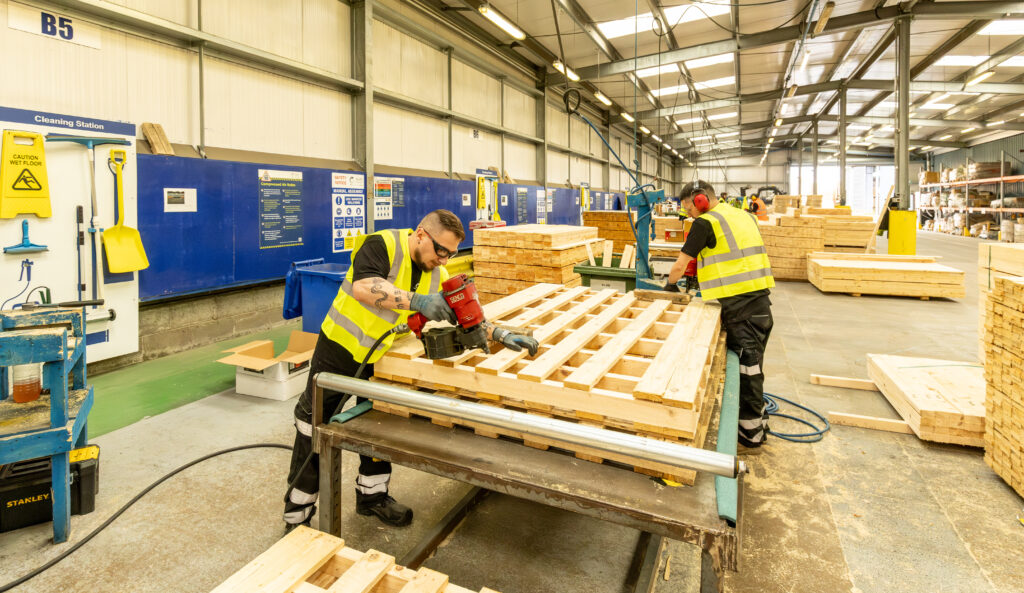
Nowadays, pallet assembly is mostly automated using specialist pallet manufacturing equipment. Machinery will arrange the components into a uniform structure. However, bespoke pallets will usually still need that human touch by manually adding the nails and working to specific templates.
Finishing
Once assembled, pallets will move through a finishing and quality control process. Excess wood and splinters will be trimmed or sanded for a smooth surface and safer handling. Quality inspections will ensure the end product is the correct size, strength and standards.
Finally, pallets will be stamped with any compliance markings and any unique company branding to help with future identification and support pallet return schemes. The finished pallets are then safely stacked, transported out into the big wide distribution world.
What type of wood is used for making pallets?
In the UK, you’ll find pallets made from both softwoods and hardwoods – which one you go for all depends on the intended use.
Softwood pallets
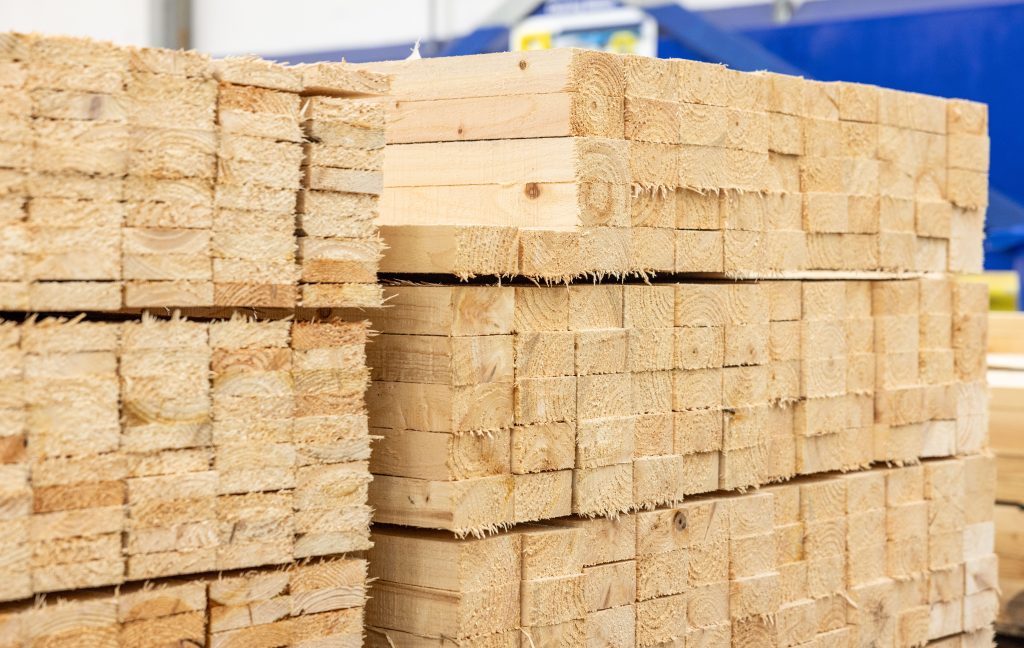
Commonly using pine, fir and spruce varieties, these softwood pallets will offer a readily available, lightweight and cost-effective option – this is especially important in food transport where there will be additional weight considerations.
Hardwood pallets
Usually crafted from oak, birch or maple, hardwood pallets offer greater strength and longevity – making them perfect for heavy-duty loads such as shipping machinery or construction materials.
Recycled wood
Pallets can also be made from reclaimed or processed wood products to reduce waste and costs.
Engineered wood or composites
For cost-effective and standardised pallets, you might also come across options that have been manufactured using alternative wood products like plywood, MDF (medium-density fibreboard) and particleboard.
One thing you’ll want to check when deciding on the wood source of your pallets is whether the manufacturer is sourcing the wood from responsibly managed forests.
What else goes into making pallets?
Of course, you can’t have a pallet without wood, but there’s more to your average pallet.
Fasteners
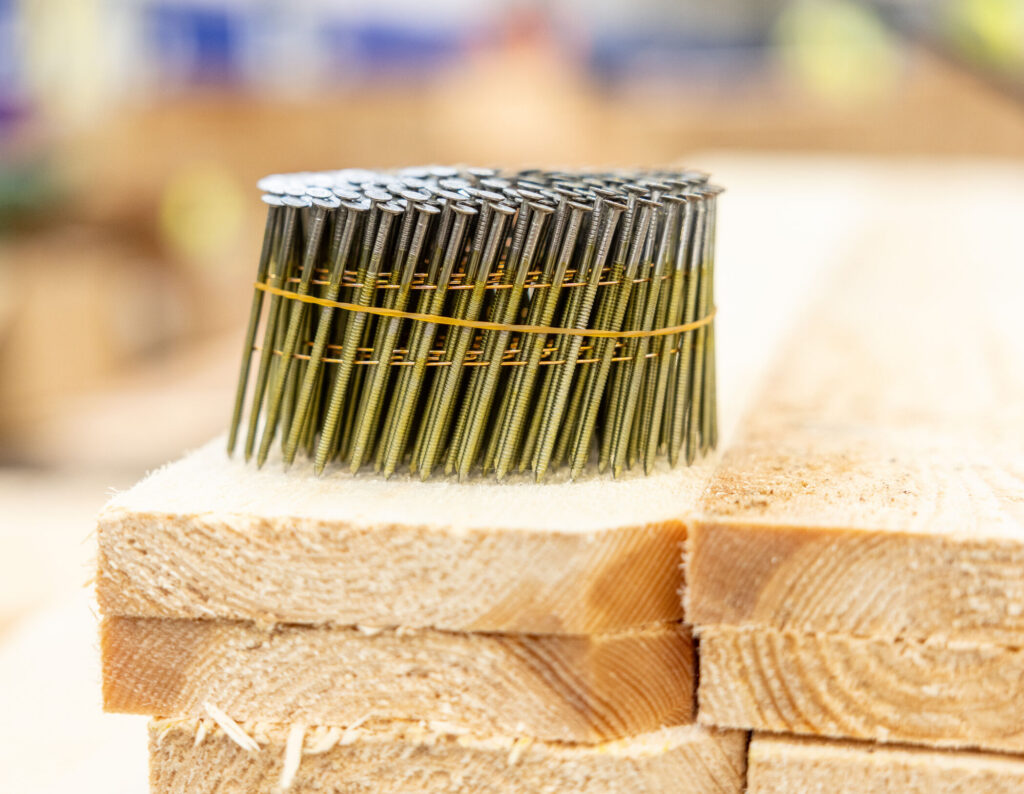
These will be either nails or staples, used to join the boards that make up the pallet. They’re typically made of steel and treated to help resist corrosion.
Glue
In some cases, to add another layer of strength and adhesion, manufacturers may use glue. This is more common when working with engineered or pressed wood pallets.
Heat treatment or fumigation
Whenever you’re using a natural material, there’s always a risk of pesky pests. That’s why for those pallets that are being used in international trade across global supply chains, the wood used must comply with ISPM 15 standards and require heat treatment or fumigation to eliminate pests.
Coatings and treatments
The wood used in pallet construction may also be treated with protective coatings to enhance durability, provide moisture resistance and prevent any fungi or insect infestations.
What are the main advantages of wooden pallets?
By offering several advantages to the end user, wooden pallets are the foundation of the logistics world for a reason.
They’re cost-effective – wooden pallets are generally cheaper to produce compared to plastic and metal alternatives making them an efficient business decision.
They’re durable – when made using quality materials, you can depend on their strength and ability to handle heavy loads.
They’re easily accessible – wood is a widely-available material which makes these pallets easier to source, especially in large quantities. There is also a strong second-hand pallet market with readily available stock.
They’re sustainable – when it comes to materials, wooden pallets are the more sustainable choice due to their ability to be repaired, reused and recycled into mulch, wood chips or fuel.
They’re easily repaired – a little bit of damage doesn’t mean end of life. They are usually easy and inexpensive to repair.
They’re customisable – wooden pallets can be easily tailored to specific size and load requests, making them appropriate for a diverse range of needs.
They’re adaptable – wooden pallets are hugely versatile which is demonstrated by the wide range of industries worldwide where they’re used to transport and store commodities.
Reconditioned pallets provide a cost effective and environmentally responsible alternative, extending the life of materials while maintaining the strength and reliability businesses depend on.
Steven Cleland, Sales Director – RBU, Scott Pallets
What are the main disadvantages of wooden pallets?
We can’t cover all the advantages without having a look at potential downsides. Here are a few things you’ll want to consider before selecting wooden pallets.
Moisture absorption
Wood absorbs moisture which can lead to warping, rotting or mould, especially if stored in a humid environment. This can compromise a pallet’s structural integrity, which is why you should consider where you’ll be keeping your pallets as you make a decision.
Pest infestation
Timber pallets can become a perfect home for insects, fungi and other pests. However most manufacturing processes will treat against this through fumigation and heat treatments.
Weight
Wood is heavier than plastic or cardboard, which can result in an increase in transportation and handling costs.
Hygiene
Timber pallets can be harder to clean. This will make them unsuitable for certain industries where there are strict hygiene requirements such as food and pharmaceuticals.
Fire hazard
Wood burns easily, so potentially combustible pallets could pose a fire risk in storage or transformation if not managed correctly.
Standard sizes and dimensions
This all depends on where you are or where you’re sourcing your pallets from as pallet dimensions will vary by country and region.
In the UK, a standard wooden pallet will be 120cm by 100cm. You’ll find that this specification is widely used for transportation and storage purposes, providing a reliable base for goods. In addition, you’ll find that in the UK, there’s a fully loaded height limit of 220cm.
Alternatively, a European standard pallet will measure 120cm by 80cm, while North American ones will use a standard size of 48×40 inches.
Then, there’s always the option to create bespoke sizing to suit specific requirements. At Scott Pallets, we work closely with our clients to audit and rationalise their pallet portfolios, ensuring you get the best value for money, safety and compliance.
Recycling and reusing pallets
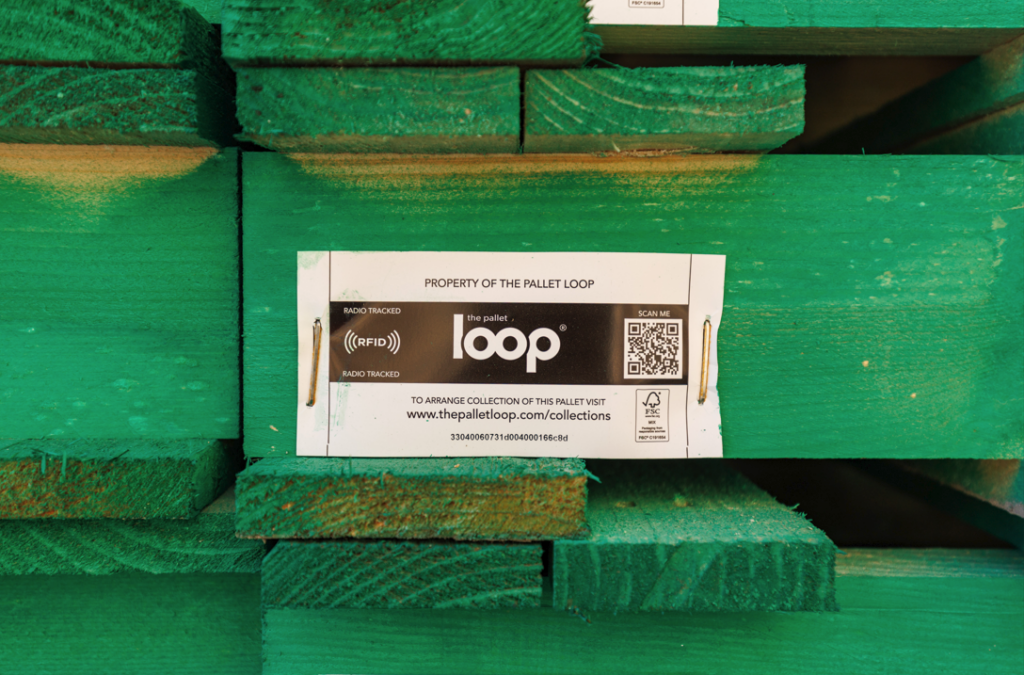
We believe that wooden pallets are ideal for recycling and reuse. And many companies agree, as they use The Pallet LOOP return service.
The Pallet LOOP offers businesses a smarter, more sustainable way to move materials, reducing waste, cutting costs and improving efficiency across the supply chain, while turning the return of green pallets into a valuable revenue stream.
Andy Williamson, Managing Director, The Pallet LOOP
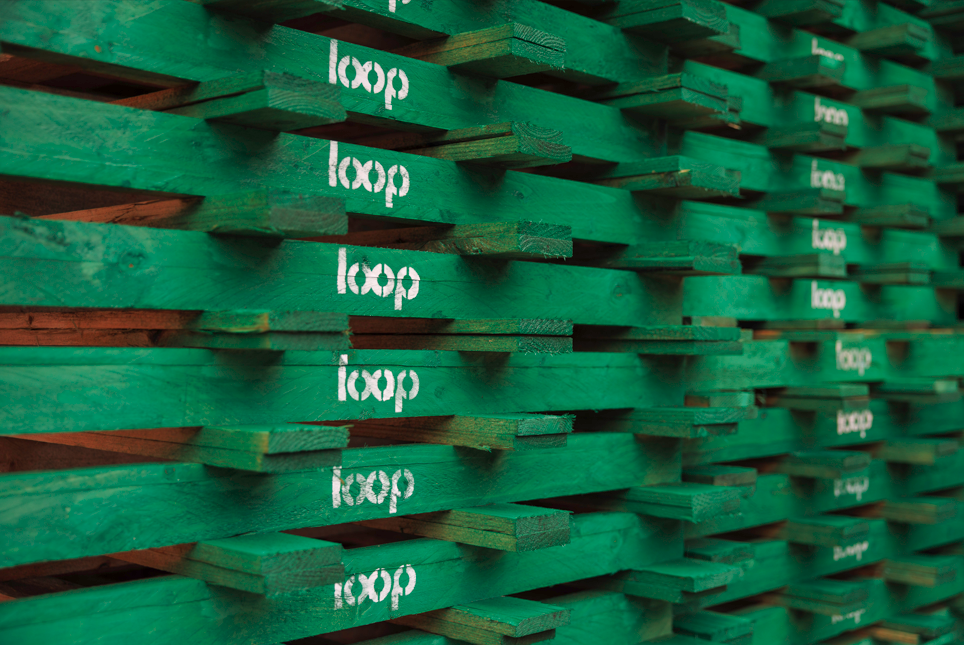
The service involves us collecting and returning used pallets to one of our sites where they are inspected, repaired if necessary, and then reused multiple times. Pallets with minor damage can be easily repaired by replacing broken boards or fasteners, extending their lifespan.
If pallets get to the point where they’re no longer salvable for their original purpose, the wood can still be used for other purposes.
Used pallets are a popular material for upcycling projects to create things like furniture, planters, garden structures and home décor. Shredded pallet wood can be processed into wood-based composite products like particleboard, pressed wood for construction, animal bedding and wood mulch for landscaping – but it’s also a useful source of biomass fuel for energy production.
Best practices for storing and handling wooden pallets
To get the best use out of your wooden pallets, you need to store them correctly. Here are a few things you’ll need to keep in mind.
Dry storage
The perfect storage space will be a dry, covered area, elevated off the ground using racks or blocks. This prevents water absorption which can lead to the development of mould or rot. If you must store your pallets outside, you’ll need to protect them from the elements using waterproof tarps and raise them on concrete to prevent any water absorption from the ground.
Stacking
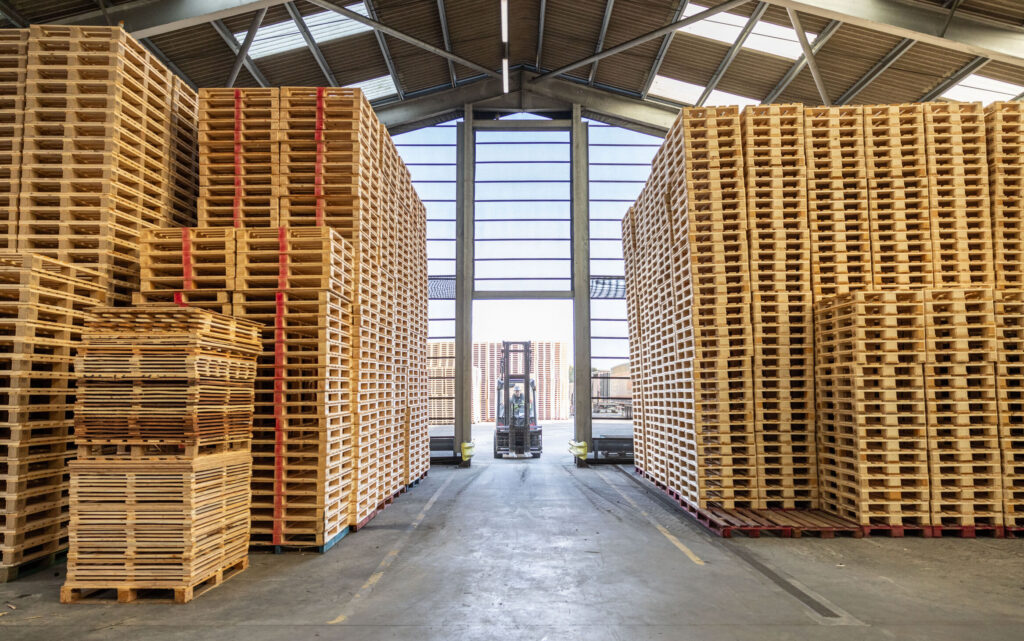
Safely stacking your pallets evenly and horizontally will help prevent any potential tipping or collapsing. We recommend that stacks should be supported and stand at a maximum of 15 feet high. An interlocking pattern will help create additional stability.
Ventilation
Allow for air circulation around your stacked pallets to minimise moisture build up and reduce the risk of pest infestations.
Safety
As wood is highly combustible, you should store your pallets away from any heat sources or flammable materials and processes. You should also ensure that you have clear walkways around pallet stacks to meet standard safety regulations.
Pallet racking
If you’re working with large-scale pallet storage, specialist pallet racking systems may be a good choice for you. This will help ensure you have organised and secure vertical stacking. Remember to check that the racks are rated for the correct weight of the pallets being stored.
Safety considerations when using wooden pallets
To keep your team safe and your goods in perfect shape, it’s essential to handle wooden pallets with care. A few smart safety steps can prevent workplace injuries and keep your supply chain running smoothly – no splinters, spills or surprises.
Handle with care
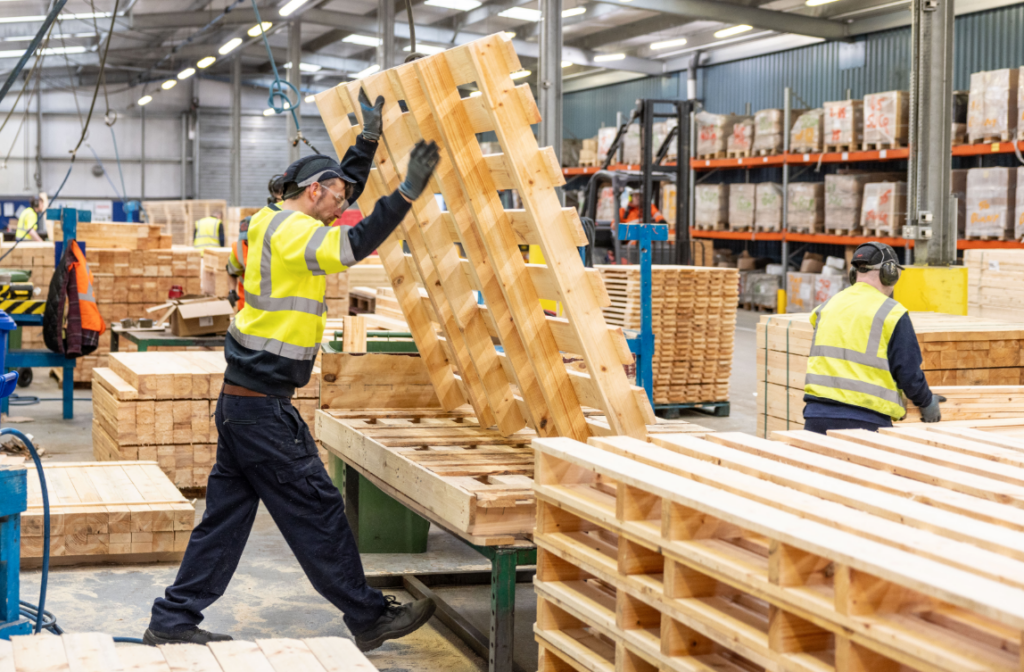
Always use the right equipment – forklifts or pallet jacks – to move your pallets safely. If manual lifting is unavoidable, follow proper techniques to avoid strain or injury. And when loading, keep things balanced and securely wrapped to prevent any unexpected shifting on the move.
Safe stacking
Keep pallet stacks level, stable and not too high so that you can prevent tipping. Avoid uneven surfaces or leaning piles, and for extra stability, try interlocking layers by rotating each one 90 degrees.
No overloading
Don’t push your pallets to the limit. Overloading can lead to collapse, causing damage and danger. Always check weight limits and use the right pallet for the job.
PPE
When handling wooden pallets, you should always be dressed for the occasion. Gloves should be worn to prevent splinters and cuts, and safety boots are essential to protect workers’ feet against falling pallets and heavy loads.
Clear pathways
Ensure storage areas and transport routes are free from obstacles to prevent trips or collisions in and around pallet storage area.
Minimise fire risks
Wooden pallets are combustible and safe storage, away from sources of heat, open flames and flammable chemicals is essential. Fire risks can be reduced further by following site code of conduct, such as limiting the quantity of pallets stored indoors and ensuring proper spacing for ventilation.
Pest and contamination
For international shipping, timber pallets must be treated in line with international guidance, for example, ISPM 15 heat treatment and/or fumigation, to eliminate pests. But it is also best practice to avoid storing pallets near any materials or substances that could contaminate them, especially if the pallets are manufactured for food-related use.
By adhering to these safety measures, you can reduce the risks associated with using wooden pallets and create a safer working environment for you and everyone around you.
How do you maintain wooden pallets?
The best way to get the most out of your pallet stock is to look after them. By following best practice advice, you can maximise their lifespan, ensuring safety and reducing costs.
Regular inspections
It sounds obvious, but it is important to check your pallets before use. Look for cracks, splinters, broken boards or missing nails, and don’t forget to verify the load capacity. A faulty pallet can collapse under pressure, putting both goods and people at risk.
Repairs
You must repair broken or missing deck boards and stringer as soon as possible using similar wood types and secure any loose or protruding nails with a hammer to avoid injuries and instability.
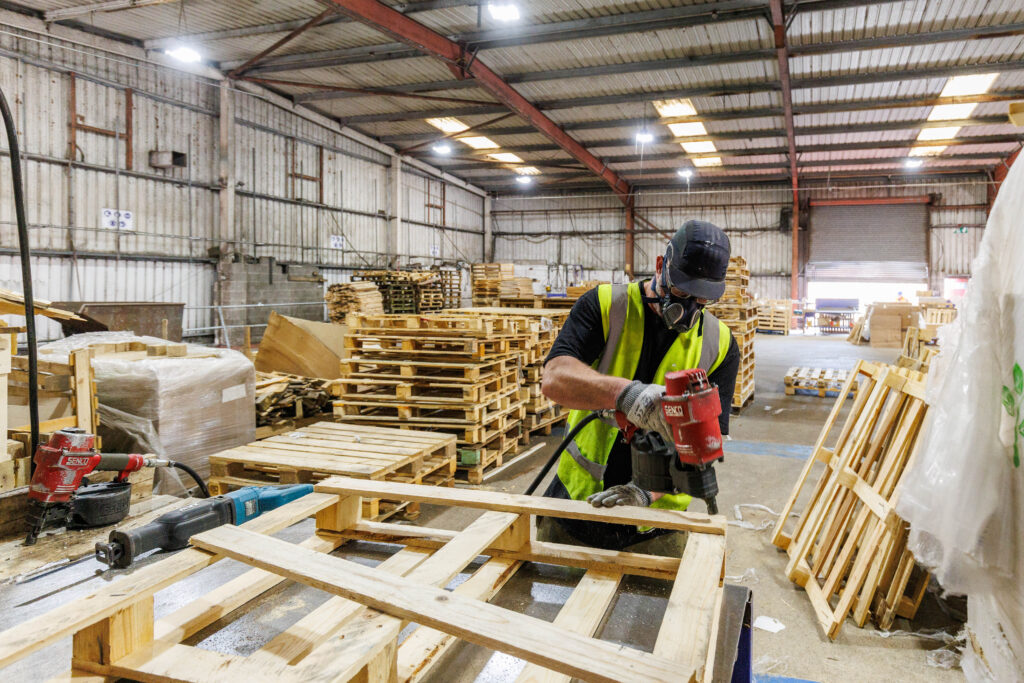
Cleaning
Keep your pallets clean by removing dirt, grease and debris after each use.
Proper storage
Pallets should ideally be stored using racks or platforms to keep them off the ground and under cover to avoid moisture. Keep them dry and in a well-ventilated area.
Avoid overloading
Always be aware of the pallet manufacturer’s load capacity to prevent undue stress or breakage. Make sure goods are evenly distributed.
Innovations in the timber pallet industry
The industry is evolving fast to meet logistical and environmental demands, and Scott Pallets is leading the charge in making pallets smarter, greener and more efficient.
Lighter, smarter designs
New designs cut out excess weight without compromising strength, using less timber and cutting transport costs.
Composite pallets
Made from recycled wood chips and sawdust, these high-performance pressed wood pallets are tough, sustainable and built for the future.
Pallet return schemes
Return schemes like The Pallet LOOP scheme is transforming the construction industry and supply chain.
Technological integration
Smart pallets with RFID or IoT technology are becoming more common, enabling better tracking, inventory management, and reduced waste in support of a more circular economy. We trialled RFID tags during 2023 and rolled them out widely during 2024.
The future of Pallets? Smarter, greener and essential.
Wooden pallets are the backbone of global logistics – versatile, cost-effective and widely available. With the right handling and care, they will last longer and work harder.
You don’t realise how important pallets are to every industry or how vital reuse is to keeping timber in circulation until you work with them every day.
Tommy Smith, Marketing Manager, BSW Group
Get In Touch
How can wooden pallets help your business?
If you want to find out more about what wooden pallets can add to your business, get in touch.
Get in touchFrequently Asked Questions
How long do wooden pallets typically last?
With proper handling, storage and occasional repairs, wooden pallets can last for multiple years. Their lifespan will depend on factors like load capacity, frequency of use and exposure to the elements.
Are there different grades of wooden pallets?
Yes, pallets can be categorised based on their condition. New or A-grade pallets are in top condition, while B-grade or used pallets may show signs of wear but remain functional.
Do wooden pallets attract pests?
If untreated, wooden pallets can attract insects, but heat-treated or fumigated pallets will eliminate this risk. Proper storage and maintenance can also prevent infestations.
Can wooden pallets be customised?
Absolutely. Custom pallets can be designed to fit specific load sizes, weights and industry requirements.
How can I tell if a pallet is damaged?
Look for cracked or splintered wood, broken boards, missing or loose nails and signs of rot or warping. Damaged pallets should be repaired or replaced to avoid safety risks.